

Written by Michael Foote, Insurance Expert
Michael Foote is the founder of Quote Goat and has over 20 years experience working in finance & insurance. Since launching Quote Goat he has appeared on TV as well as many of the largest online publications including Forbes, The Telegraph and The Metro. Prior to Quote Goat, he worked in finance in the city.
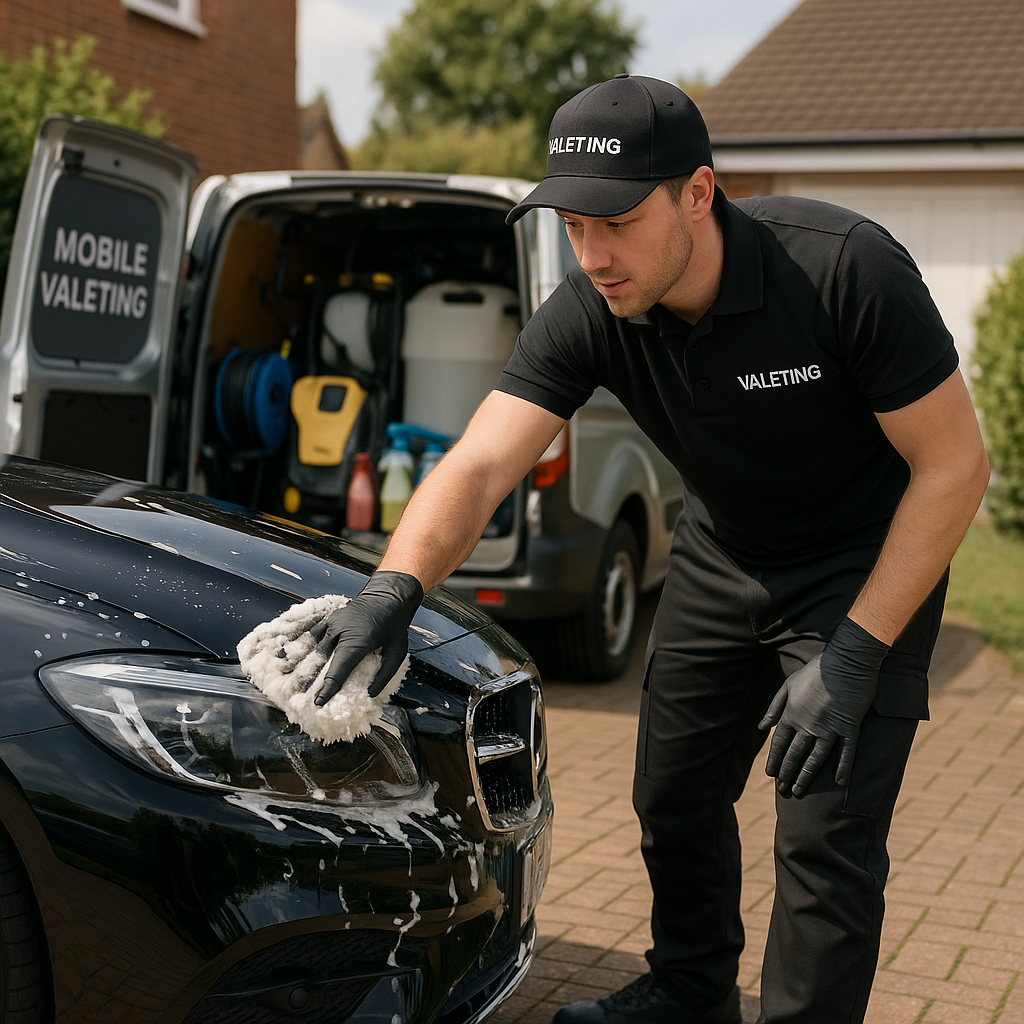
What insurance do you need for mobile valeting?
Mobile valeters need specialist motor trade insurance that covers the specific risks of cleaning and handling customer vehicles. This typically includes:
- Public liability insurance for third-party injury or property damage
- Treatment risk cover (also called care, custody and control) for damage to vehicles you’re working on
- Employers’ liability if you have staff
- Tools and equipment cover for your valeting kit
- Road risk insurance if you move or reposition customer vehicles
Standard public liability policies exclude motor trade activities. If you damage a customer’s car while valeting it, a generic policy won’t cover you. You need a policy written specifically for motor trade businesses.
For a detailed breakdown, see our guide on what insurance car valeters need.
Why treatment risk cover is essential
Treatment risk is the most important element of mobile valeting insurance. It protects you when you accidentally damage a vehicle in your care.
Common claims include:
- Scratches or swirl marks from polishing or buffing
- Paint damage from incorrect product application
- Broken mirrors, lights or trim during cleaning
- Interior water damage if windows are left open
- Scrapes or dents caused while moving the vehicle
Without this cover, you pay repair costs yourself. Even minor paintwork corrections can easily exceed £500, and damage to prestige vehicles can run into thousands.
Our article on whether valeting insurance covers damage to paintwork explains how treatment risk responds to different types of claims.
Do mobile valeters need road risk insurance?
Yes, if you drive customer vehicles at any point. This includes repositioning a car on a driveway, moving it to access another vehicle, or driving it onto your premises.
Most mobile valeters need Class 1 road risk, which allows you to drive customer vehicles in connection with your business but not for personal use. This differs from Class 2 (which includes personal use) and Class 3 (for buying and selling vehicles).
Without road risk insurance, you’re driving uninsured if you move a customer’s car, even a few metres. This can result in penalty points, fines, and invalidate any claim if you cause damage.
What affects the cost of mobile valeting insurance?
Premiums depend on several factors:
Your experience and history – Newly established valeters pay more than those with a proven track record. A clean claims history reduces premiums significantly.
Vehicle types – Working exclusively on standard family cars costs less to insure than valeting prestige or performance vehicles. Higher vehicle values mean higher potential claims.
Turnover – Insurers use your annual turnover as a proxy for risk exposure. Higher turnover usually means higher premiums.
Staffing – Sole traders pay less than businesses with employees. Each additional person increases your risk profile.
Cover limits – Higher public liability limits (£5 million vs £1 million) and treatment risk limits increase premiums.
Location – Urban areas with higher vehicle values and theft rates typically have higher premiums than rural locations.
Storage – Where you store equipment overnight affects risk. Secure commercial premises are cheaper to insure than home storage or leaving equipment in your van.
How much does mobile car valeting insurance cost?
As a rough guide:
- Sole trader mobile valeters with no staff and under £30,000 turnover: £300 to £600 per year
- Valeters working on prestige vehicles or with one employee: £600 to £1,000 per year
- Established businesses with multiple staff or higher turnover: £1,000 to £2,000+ per year
These figures assume standard cover levels (£2 million public liability, £100,000 treatment risk) and a clean claims history. Your actual premium depends on your specific circumstances.
For broader context on motor trade insurance pricing, see our guide on how much motor trade insurance costs in the UK.
What to check before buying a policy
Before committing to mobile valeting insurance, verify these key points:
Treatment risk limit – Ensure the maximum payout per claim is adequate for the vehicles you work on. £50,000 may be sufficient for standard cars, but prestige vehicle valeters should consider £100,000 or higher.
Excess amounts – Understand what you’ll pay towards each claim. Typical excesses range from £250 to £1,000. Higher excesses reduce premiums but increase your out-of-pocket costs.
Geographic coverage – Most policies cover mainland UK. Confirm whether Northern Ireland, Isle of Man or occasional European travel are included if needed.
Product restrictions – Check whether the policy covers all cleaning products and chemicals you use. Some insurers exclude harsh or industrial-grade chemicals.
Equipment coverage – Clarify whether tools and equipment are covered only while in your vehicle, at your premises, or at customer locations. Mobile valeters need cover that follows their kit wherever they work.
Sub-contractors – If you use casual helpers or sub-contractors, confirm whether they’re covered or need separate policies.
Van insurance – Ensure your commercial vehicle insurance includes business use for carrying equipment and travelling to customers. Your valeting insurance doesn’t cover your van itself.
What’s not typically covered
Mobile valeting insurance has standard exclusions:
- Wear and tear or gradual deterioration
- Damage caused deliberately or through criminal acts
- Work outside your stated business activities
- Claims arising from work done before your policy started
- Fines or penalties imposed by authorities
- Damage to your own vehicle or equipment (unless you have tools cover)
Some insurers exclude certain activities unless specifically added:
- Ceramic coating application
- Paint correction or machine polishing
- Interior restoration or leather repair
- Collection and delivery services
If these form part of your service offering, declare them when getting quotes.
Additional covers to consider
Depending on your business model, you might benefit from:
Legal expenses insurance – Covers legal costs if you need to defend a claim or pursue a customer for non-payment. Particularly useful for sole traders who can’t absorb legal fees easily.
Personal accident cover – Provides a payout if you’re injured and unable to work. Important for sole traders without sick pay or income protection.
Goods in transit – Covers customer vehicles if you offer collection and delivery services over longer distances.
Business interruption – Replaces lost income if you can’t work due to illness, injury, or equipment failure. Helps cover fixed costs while you recover.
How to reduce your premium
Keep mobile valeting insurance costs manageable by:
- Building a no-claims history through careful work practices
- Increasing voluntary excess (only if you can afford to pay it)
- Installing security devices on vehicles or premises where you store equipment
- Taking professional training courses in valeting techniques
- Keeping accurate records of customers, jobs and any incidents
- Paying annually rather than monthly to avoid interest charges
- Comparing quotes from multiple motor trade insurers annually
Don’t cut corners by underinsuring or omitting essential covers. The savings aren’t worth the risk if you face a claim.
Why standard public liability isn’t sufficient
Many new mobile valeters assume basic public liability insurance will protect them. It won’t.
Standard public liability policies explicitly exclude work involving motor vehicles. Insurers class any damage to a vehicle you’re working on as outside the scope of generic cover.
Motor trade insurers understand the specific risks valeters face and provide treatment risk cover designed for your activities. This is why specialist cover is essential, not optional.
We explain this in detail in our article on why standard public liability insurance isn’t enough for valeters.
Getting covered
Mobile valeting insurance protects your business from the financial impact of accidents and claims. Without it, a single incident could end your business.
Make sure your policy includes adequate treatment risk cover, road risk if you drive customer vehicles, and tools cover for your equipment. Check the limits, excesses and exclusions carefully before buying.
Ready to protect your mobile valeting business? Get a tailored quote using the button on this page and compare cover from specialist motor trade insurers.
