

Written by Michael Foote, Insurance Expert
Michael Foote is the founder of Quote Goat and has over 20 years experience working in finance & insurance. Since launching Quote Goat he has appeared on TV as well as many of the largest online publications including Forbes, The Telegraph and The Metro. Prior to Quote Goat, he worked in finance in the city.
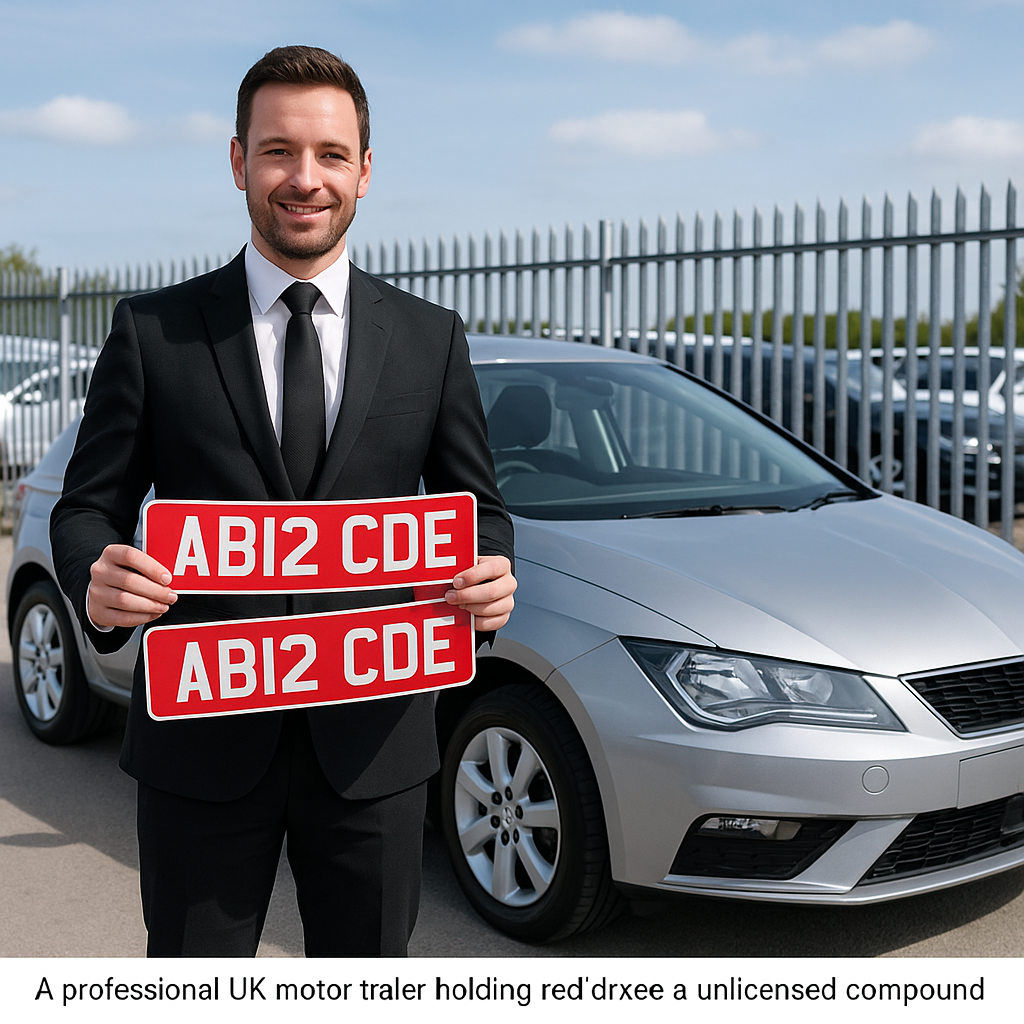
What is trade plate insurance?
Trade plate insurance covers you when using trade plates to drive unlicensed or untaxed vehicles on public roads. It allows motor traders, mechanics, vehicle recovery operators and other professionals to test, deliver or move vehicles that aren’t taxed or insured under a standard policy.
Trade plates are issued by the DVLA under a specific licence permitting their use for defined business purposes. Insurance is usually included in a broader motor trade insurance policy, though standalone trade plate insurance is available if you only need to move vehicles.
Who needs trade plate insurance?
Trade plate insurance is required by:
- Car dealers moving stock between locations or delivering vehicles to customers
- Mechanics and garages collecting or returning customer vehicles
- Vehicle transporters driving vehicles onto and off trailers
- Vehicle repairers conducting road tests after servicing or MOT work
- Recovery operators collecting broken-down or accident-damaged vehicles
- Pre-delivery inspection services moving vehicles from ports or auctions
- Part-time traders buying and selling cars without fixed premises
You must hold a valid DVLA trade licence to use trade plates legally. Insurance does not replace this requirement, and insurers will ask for proof of your trade licence when arranging cover.
What does trade plate insurance cover?
A standard policy generally includes:
- Use of trade plates for DVLA-defined business purposes
- Cover for named drivers or employees using the plates
- Driving to and from auctions, MOT stations, repair centres or customer addresses
- Road testing vehicles after repair or servicing
- Delivery and collection of customer or stock vehicles
- Cover for cars, vans, motorcycles or other vehicle types, depending on the policy
Most policies also allow you to drive your own vehicle for business purposes, though this isn’t always automatic. Check whether your personal vehicle is covered or requires separate business use insurance.
Comprehensive vs third party cover
Fully comprehensive trade plate insurance offers the highest protection, covering damage to the vehicle you’re driving, third party injuries and property damage, plus theft. This is the most common type and often required by lenders or customers for high-value vehicles.
Third party only trade plate insurance covers damage or injury you cause to others but not the vehicle you’re driving. It meets the minimum legal requirement and suits low-value or end-of-life vehicles.
Some insurers offer limited mileage policies with restricted annual use for occasional traders. This reduces premiums but may leave you uninsured if you exceed the agreed limit.
What is not covered by trade plate insurance?
Trade plate insurance does not usually cover:
- Personal or social use of vehicles, including commuting unless specifically added
- Vehicles used for hire or reward, such as taxi work or courier services
- Vehicles driven by unlicensed or uninsured drivers
- Vehicles used for racing, rallying or competitive events
- Damage caused by driving under the influence of alcohol or drugs
- Damage occurring off public roads, such as on private land or within a compound
If you use trade plates to move vehicles carrying goods for commercial purposes, you may need separate goods in transit cover. Similarly, transporting customer vehicles on a trailer may require explicit inclusion in your policy.
Standalone trade plate insurance vs motor trade insurance
Standalone trade plate insurance is designed for businesses that only move vehicles and don’t carry out repairs, servicing or sales. It’s cheaper than full motor trade insurance but offers less comprehensive protection.
Motor trade insurance typically includes trade plate cover as standard, along with premises liability, tools and stock cover, and employers’ liability if you have staff. If your business involves repair, servicing or sales, you’ll need a full motor trade policy rather than standalone trade plate insurance.
Driver restrictions and requirements
Most trade plate policies restrict who can drive under the cover:
- Minimum age limits, often 21 or 25 years old
- Minimum experience requirements, such as two years holding a full UK licence
- Named driver policies, where only listed individuals are covered
- Any driver policies, allowing any employee or contractor to use the plates, subject to age and experience criteria
Violating these restrictions invalidates your cover and leaves you personally liable for claims. Ensure all drivers understand the policy terms and hold the correct licences before allowing them to use trade plates.
What to check before buying trade plate insurance
Before arranging cover, confirm:
DVLA trade licence validity: Ensure your licence is current and matches your intended activity. Insurers won’t cover unlicensed use.
Driver qualifications: Check all drivers meet the age, experience and licence requirements.
Vehicle types covered: Confirm the policy covers all vehicle types you’ll move, including motorcycles, vans or commercial vehicles. If you deal with motorcycles, see our guide to motorcycle trade insurance.
Mileage limits: If the policy includes a mileage cap, estimate your annual usage to avoid breaching it.
Territorial limits: Most policies cover UK use only. EU driving may require additional cover.
Excess amounts: Check the excess per claim and whether it varies by driver or vehicle value.
Business use definition: Ensure the policy covers all activities you perform, such as test drives, delivery, collection and auction attendance.
Personal vehicle use: Clarify whether your own vehicle is covered for business purposes or requires separate insurance.
Storage location: If you store vehicles at your home or on private land, check how this affects your cover. Read more about how vehicle storage affects your motor trade premium.
Common pitfalls to avoid
Using trade plates for personal journeys
Trade plates must only be used for DVLA-defined business purposes. Using them to commute, run personal errands or allow family members to drive invalidates your insurance and can result in prosecution.
Driving vehicles without valid trade plates
Motor trade insurance doesn’t cover you to drive any vehicle at any time. You must display valid trade plates when driving an unlicensed vehicle. Failure to do so can result in fines and penalty points.
Exceeding the scope of your trade licence
Your DVLA trade licence specifies permitted activities. If your insurance covers a broader range than your licence allows, you may be uninsured when claiming.
Failing to declare convictions or claims
All drivers must declare motoring convictions, endorsements and previous claims. Non-disclosure can void your policy and leave you personally liable for damages.
Assuming all vehicle types are covered
Some policies exclude certain vehicle types or require additional premiums for motorcycles, commercial vehicles or high-value cars. Always check the policy wording before assuming cover applies.
Getting a quote for trade plate insurance
Trade plate insurance costs vary based on your business type, the number of drivers, vehicle types and your claims history. Comparing quotes from multiple insurers helps you find the right balance between cover and cost.
Ready to get covered? Use the button on screen to compare trade plate insurance quotes tailored to your business.
